07.05.2026.
Surgery for a deformed nose
Surgery for a deformed nose: Belgrade, Serbia. TOP PRICE✓ Rhinoplasty✓ Nose correction✓ Nose reconstruction✓ Deviation of the septum✓ Nose hump✓
Have you ever avoided using a profile picture or felt insecure about the shape of your nose? A deformed nose is not just an aesthetic challenge; it often carries the burden of emotional discomfort and functional difficulties. Changing the shape of your nose can be a crucial step toward restoring self-confidence and achieving the facial harmony you’ve always dreamed of.
-

-

- Blog
-
- Surgery for a deformed nose
Surgery for a deformed nose
The nose occupies a central position on the face and plays a key role in overall facial symmetry. Any irregularity, whether congenital or caused by injury, is easily noticeable, affecting not only appearance but also self-confidence. Fortunately, modern medicine allows precise correction of a deformed nose through rhinoplasty—a procedure that combines both aesthetic and functional goals. This article provides a detailed analysis of nasal deformities, medical indications for surgery, surgical approaches, and the recovery process, with special attention to an individualized approach for each patient.
What Constitutes a Nasal Deformity?
Nasal deformities can manifest in various ways, and understanding their causes is crucial for surgical planning. The most common changes in patients include:
- Pronounced dorsal hump – visually disrupts facial balance and affects the profile, making the nose appear dominant or disproportionate.
- Wide nasal tip – may create a sense of heaviness in the central face and disturb symmetry.
- Crooked nose – can result from trauma or congenital asymmetry, often accompanied by septal deviation that makes breathing difficult.
- Irregular nostrils affect both aesthetics and nasal function, especially in pronounced asymmetries.
Causes of Nasal Deformities
Genetic (Congenital): The nose shape is inherited from parents, fully formed after puberty. These deformities may include asymmetrical tips, mild or pronounced humps, wide nostrils, or underdeveloped nasal structures. Surgical planning for congenital deformities must be precise to ensure the nose is proportionate to the rest of the face.
Acquired (Traumatic): Resulting from nasal fractures due to sports, falls, or accidents. In these cases, the nose often heals in an irregular position, leading to both aesthetic and functional issues. Traumatic deformities may include a crooked nose, disproportionate tip, cartilage or septum damage, which can cause breathing difficulties and chronic sinus problems.
Many nasal deformities also involve septal deviation, which means rhinoplasty often has a medical purpose: improving breathing, reducing the risk of chronic sinusitis, and eliminating issues such as snoring.
How Surgery Changes Appearance and Function
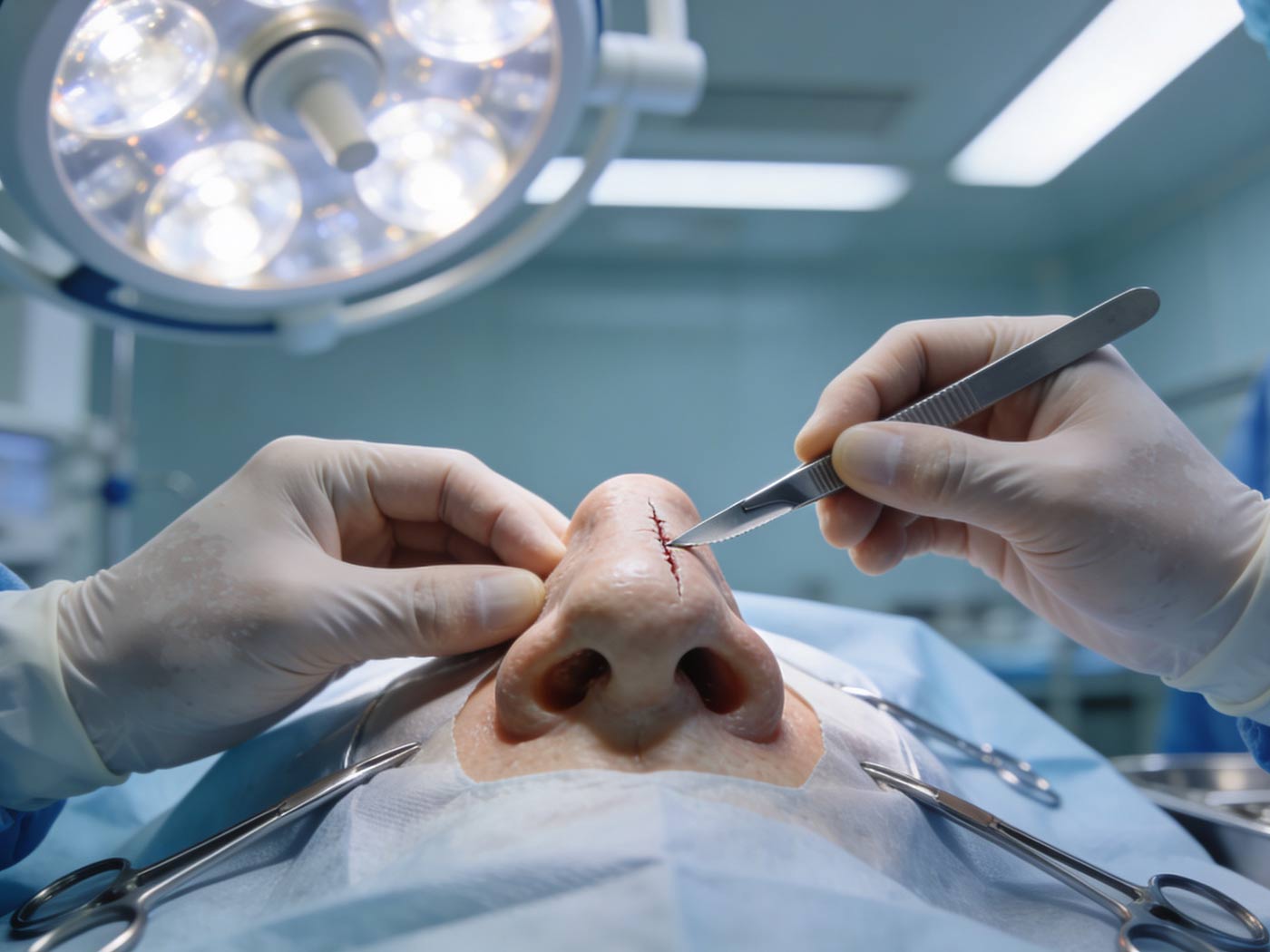
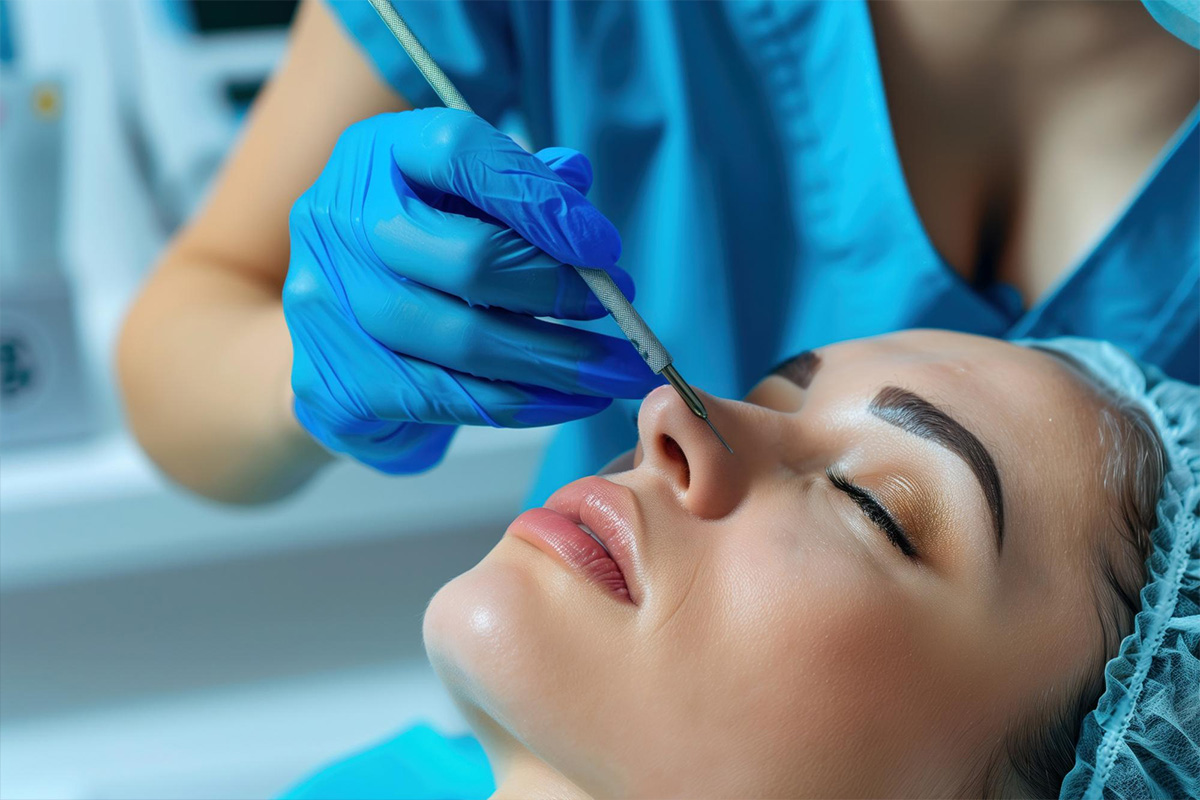
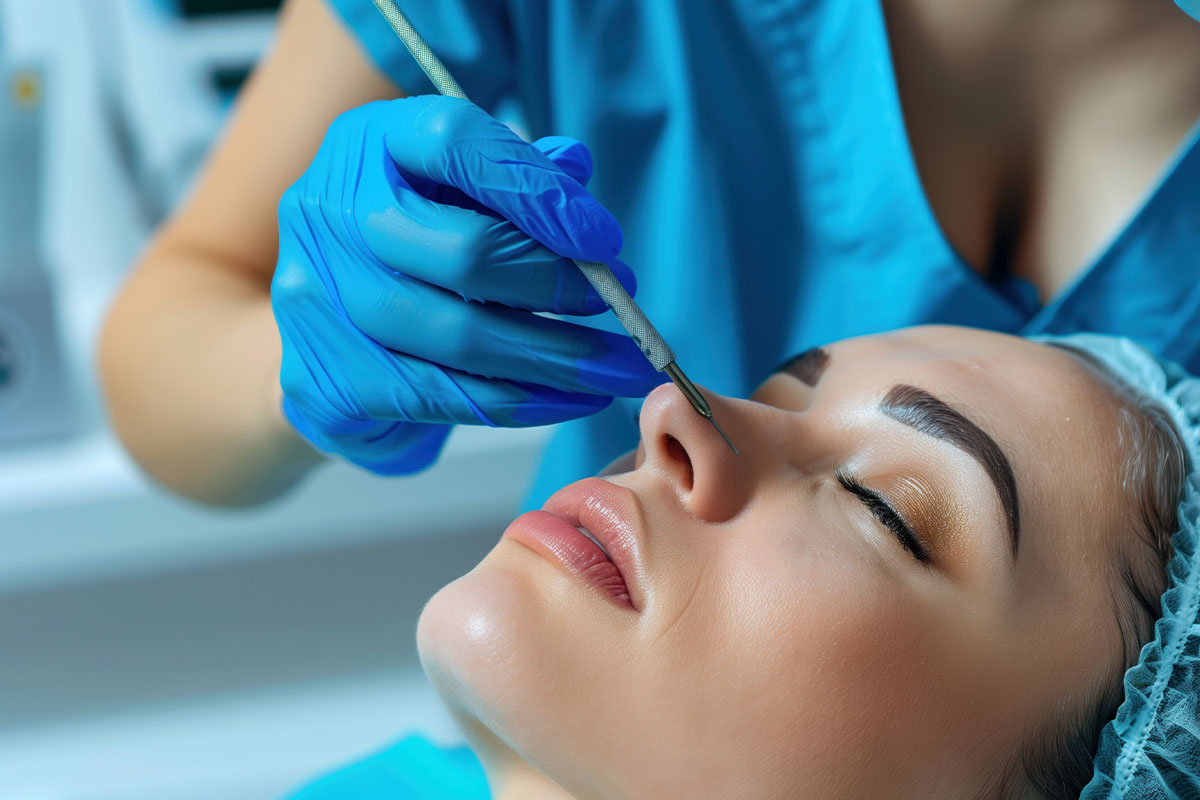
Rhinoplasty is a precise and complex procedure that combines medical expertise with an aesthetic eye. The goal is not just a “pretty nose,” but one that naturally fits the patient’s face and functions optimally. During surgery, it is possible to:
- Remove bone or cartilage humps for a smooth, natural profile.
- Correct asymmetry and crookedness, achieving facial balance and improving airflow.
- Reduce or increase nasal size, depending on facial proportions and patient goals.
- Reshape the nasal tip, including lifting or narrowing it, for facial harmony.
- Adjust nostril width to enhance symmetry and functional stability.
This combination of aesthetic and functional correction provides patients with a dual benefit: a natural appearance and improved breathing.
When is the Right Time for Surgery?
Surgery is recommended for patients at least 18 years old, as facial bones need to complete their growth. Rhinoplasty performed at maturity provides lasting results, and a properly executed procedure ensures a stable nasal shape that will not change over time. Surgery after full anatomical development guarantees that both aesthetic and functional outcomes are long-lasting.
Preparing for Surgery
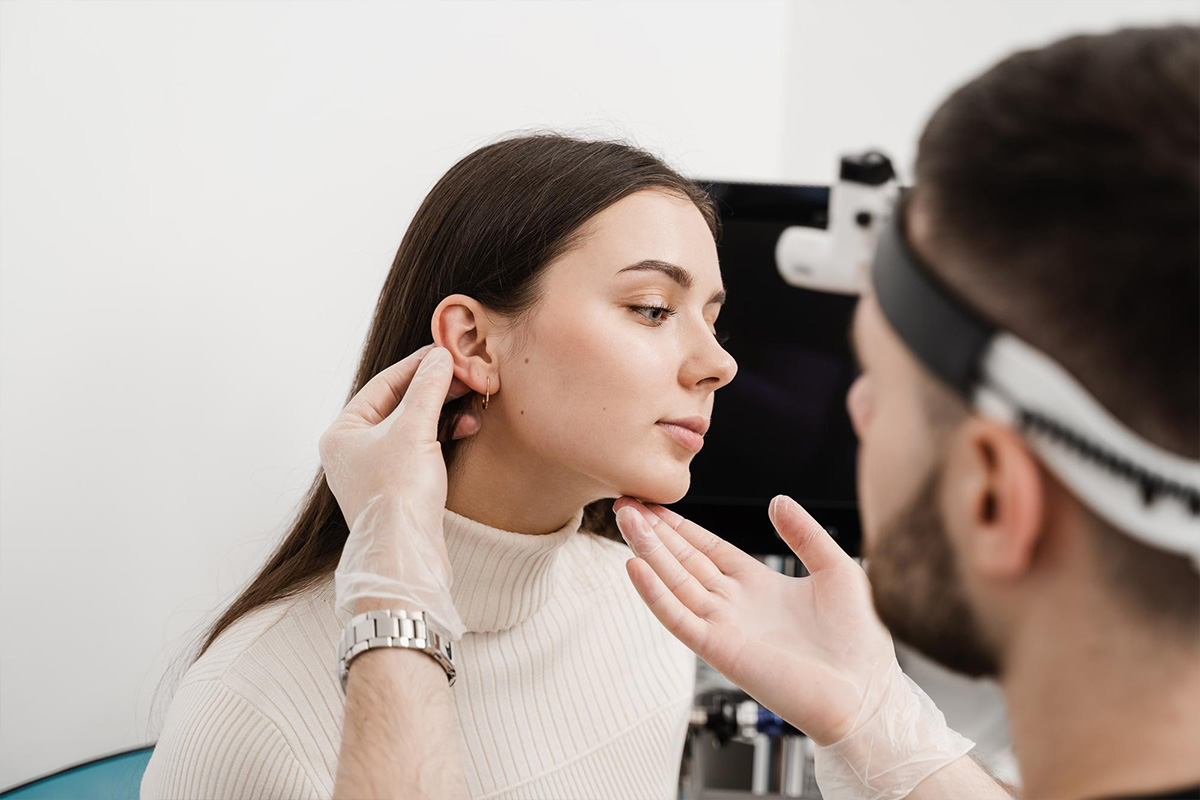
Preparation involves detailed consultations with the surgeon, medical tests, and precise aesthetic planning. During consultations, patients share their desires and expectations, while the surgeon assesses what corrections are possible given the facial anatomy. Standard preparations include lab tests, EKG, and a general medical examination to ensure safety under general anesthesia.
Surgical planning is highly individualized, as each nose requires a unique solution. The goal is to achieve a harmonious shape that naturally complements the face, considering the proportions of the forehead, cheeks, and chin.
Postoperative Process and Results
Many patients worry about recovery, but modern techniques allow for a faster and more comfortable process. During the first week, a light splint protects the new nasal structure, while swelling and bruising around the eyes gradually subside within 7 to 10 days. Most patients return to daily activities after two weeks, while strenuous physical activity should be avoided for a month.
The final nasal shape becomes gradually visible as swelling decreases, and results fully stabilize after several months. A properly performed rhinoplasty delivers a natural, harmonious, and functional nose that enhances overall facial balance.
Cost of Corrective Nasal Surgery
When choosing a clinic for nasal surgery, price should not be the sole factor. The quality of medical service, surgeon experience, and procedural safety directly affect the final result and long-term patient satisfaction.
Currently, promotional offers allow patients to correct both aesthetic and functional issues under favorable conditions:
- Full nose surgery: from €2,975 (regular price €3,000)
- Nasal tip correction: from €1,100 (regular price €1,300)
These prices include comprehensive services—from initial consultations and medical evaluations to detailed planning, postoperative care, and follow-up.
The quality of service and team expertise are often decisive in achieving natural, stable results. Over 7,000 satisfied patients attest to the team’s professionalism and reliability.
Why Choose Royal Aesthetic Surgery Belgrade for Nasal Correction?
Correcting a deformed nose is one of the most complex procedures in aesthetic surgery, requiring both artistic sensibility and surgical precision. At Royal Aesthetic Surgery Belgrade, we understand that there is no “universal nose”—each patient receives a unique solution.
- Expert aesthetic assessment: Our team carefully analyzes your facial proportions (forehead, chin, cheeks) to ensure perfect balance.
- Combined approach: We address both aesthetic deformities and functional issues (septorhinoplasty), saving time and providing dual benefits.
- State-of-the-art techniques: We use methods that minimize tissue trauma, meaning less bruising and faster social reintegration.
- Individualized recovery: Each patient receives personalized instructions and continuous support from our team after surgery.
Your Trust, Our Responsibility
Royal Aesthetic Surgery Belgrade, serving patients across the Balkans and Europe, is dedicated to achieving natural and harmonious results. Our goal is not to make the surgery visible, but to ensure that the patient looks refreshed, balanced, and feels the same.
Schedule a consultation and take the first step toward a transformation that combines beauty and health. Your change starts now.
Contact us and find out how we can help you
If you want to schedule a rhinoplasty appointment, are interested in nose surgery prices, or have additional questions for us, please contact us at +381 62 92 49 195 or visit the following pages: Nose Surgery, Nose tip surgery, and Complete Nose Surgery.



Royal Plastic Surgery
Why choose us?
The best, most affordable and safest aesthetic clinic in Belgrade and Serbia.